Texas, USA
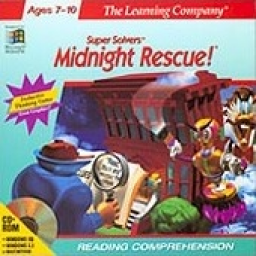
So it has come to my attention that (at least in the version that I use) the backgrounds aren't static. For instance, if you start a new game and go directly left, you'll get a different background every time you start a new game, even though it is supposedly the same screen. I haven't been recording this, but I thought I'd bring it up, because there might be some kind of correlation between the background used and whether or not there are gems / puffer fish on that particular screen.
I was just watching Bioice's speedrun of the original Starcraft, and I noticed an interesting tactic used around 36:30.
https://www.speedrun.com/run/zn88lkvz
A little background here: the goal of this level is to bring a certain object to a certain destination, which sounds relatively simple, but because this destination is in the center of the enemy encampment, and because only the weakest unit can carry the object, the implication is that you have to destroy the enemy encampment to achieve this goal.
However, the game also gives you use of a certain unit that happens to have the ability to put a protective shield around any other single unit. By putting a protective shield around the weak unit and marching it straight into the camp, he beats this level in about thirty seconds. It's not a very straightforward tactic, but because the only requirement for this level is to transport the object, it is a brilliant approach.
So I was wondering what other interesting / unique approaches you all have seen in speedruns? I'm not talking about glitches or game physics abuse, but where someone uses the tools provided to them in an unorthodox manner to achieve some goal much faster than it might have been done the conventional way. I'm really interested in that kind of stuff, and I would very much appreciate any recommendations for runs that employ imagination rather than brute force to solve a problem.
Thanks! You guys and gals are awesome!
Heh, I'm not sure "seriously" is the proper term, but it would be kinda cool to be a moderator.
I'm not sure if you can, but if you changed the trophy icons to the same ones given in the game for beating each level, that would be kinda funny. Just a thought.
Haha, no tools here, just careful observation and educated guessing. This game isn't quite complicated enough to warrant something like that. The maps are super simple, and I'm pretty sure the location of the puffer fish really is randomized (not a good way I can think of to predict it anyway... yet...), and though I also feel like the three sets of clues are randomized, I think they are picked from a pool of three clues bound together rather than picked randomly individually, and I think that's the key to speedrunning any% one level.
Even if the variables are randomized, there are different classes of "random", and it takes a lot of work to make something truly random (i.e. every possibility has an equal chance of appearing), and I doubt that this game's developers really went into that much effort for what is essentially just a children's educational game. All the software devs I know have this attitude of "if it works, leave it alone- functionality first, optimization later if needed". You can probably tell from my work here and with Gizmos, but my particular field tries to find better or unique ways of approaching problems that may seem unsolvable using conventional approaches. I love math and I speak "computer", so figuring out the inner workings of a simple program like this and using it to find patterns or exploits is just one of my hobbies.
I think that's one of the things I like most about the speedrunning community- there are just as many ways to solve a problem as there are types of people making speedrunning videos, and there is no one "accepted" way to speedrun a game; all approaches are respected equally (at least within the community)
Hey, and I'd be interested as well to see how the variables hold out from one version to the next. How much did the developers change when porting the game from DOS to Windows? Do you also get the same clues over and over when replaying the first level over and over? Is there a discernible pattern to the puffer fish location or the clues or anything else that might stand out? (where the stars first appear on the screen, what the first objects that spawn below you are, etc.) I don't know how much you know about software development or how these variables are defined, stored, or manipulated, but I think it would be interesting to have someone else to discuss these with.
Based on what I've seen in other games, whenever a new player comes through with a new glitch / idea that drastically changes the times, either it is adopted by all the other people in that group or a new category is made. For this game, though, I think the categories would be more like the "We just play for funsies" category and the "Wow this guy needs to get a life" category, lol.
I just found this, it's a pretty good thesis on the subject of randomness and random number generation:
http://digitalcommons.liberty.edu/cgi/viewcontent.cgi?article=1311&context=honors
Hello! So I'm not the only person interested in this game, heh.
Hey, I just saw your message on Twitch, so I'll respond to both of them here if that's okay. TL;DR I used statistics. I submitted the one where I happened to be right three times in a row, but what you don't see is all the ones where I didn't get it right.
In more detail: I live about an hour light rail ride south of Seattle, and every time I rode in to work, I'd make a single run and record what the clues were. I was curious to see if there was a repeating list of clues or if certain clues were used more often than others. In cryptography, there are different types of "random", and some are easier to predict than others. For instance, a truly random number selected from the set [1,2,3,4,5] should result in more or less the same number of occurrences of each, but a truly random number selected from the set [1,1,1,1,1,2,3,4,5] will result in "1" more often than the others, even if the selector is truly random. This seems to be the case (in at least my version) for certain variables (for instance, the number "2" in clues for the first stage seems to be more frequent than other numbers, and certain clues seem to be tied together, for instance, if you see four flounders, you can pass right by it, because I've only ever seen the clue "three brown flounders". I'm sure there's more I'm not catching, but it's basically just using probability based on known data sets.
On a slightly different note, I've never actually seen your version before; I was wondering why you were using an updated program when the original is much easier to find. I've been using the emulator on this site:
https://classicreload.com/treasure-cove.html
I like it because once the game loads, it doesn't require an active internet connection.
For anyone still paying attention to this thread, the video for the run in question is here:
As an added note, I find it interesting that I'm not the only person on the planet that knows about / cares about this game. It makes me giggle a lil' bit, heh.
If I ever get this thing stabilized, I'll make it open source and link it to github or something so you guys can get a piece of this action too.
Hey, yeah, no problem. The program works strictly off of user input, and is no more than a glorified calculator. Whether or not it is "tool-assisted" is the question, I think.
I've actually been throwing numbers into a database for weeks before I started getting results that kinda sorta work, and the one I submitted still had flaws. Honestly, I just wanted to see whether or not it could be done.
See the thread post I made here: http://www.speedrun.com/Speedrunning/thread/0l7sz/1#uw84t
That's about what I figured, but I'm kinda new to this (and kinda love it), so I'm not sure where these lines are drawn. I figured it's a question that a lot more people than I have, but I suppose I'll be the scapegoat who actually asks, lol. Thanks all!
There's a game I'm working on that has random item drops, but if I use a probability density function based on the information given on the first stage (requires a calculator), I can calculate the most likely route in later stages. Is punching numbers into a calculator considered tool-assisted?